

Wartime Memories No. 5
The following are my experiences and memories growing up in Leith, Scotland during the Second World War.
It felt as though the war had been going on for ever.
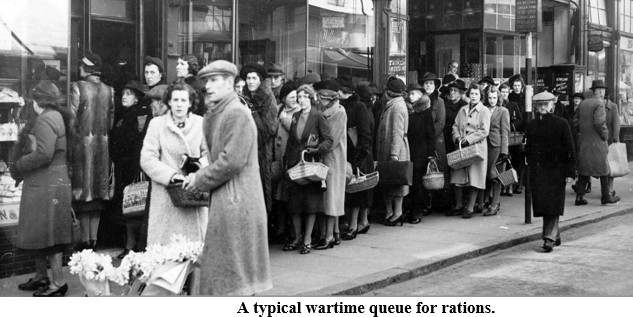
It was Saturday again and for me it meant an early morning trip to join the queue outside the Leith Provident bakery shop in Bangor Road. Bread and other bakery items were not rationed, and Saturday was the day that the ‘Store’ bakers fired up the oven and made a few cakes, buns and tea-bread from the rationed ingredients, necessary for the job they had managed to ‘put aside’ during the previous week. The amount and variety of what they made depended very much on what they had gleaned over the previous week.
Joining the queue was an act of desperation, linked with one of blind faith, as no one knew exactly what the bakers would deliver to the shop. Almost everyone in the queue, had their heart set on getting a jam sponge and if not, a few spicy buns, soda scones or pancakes.
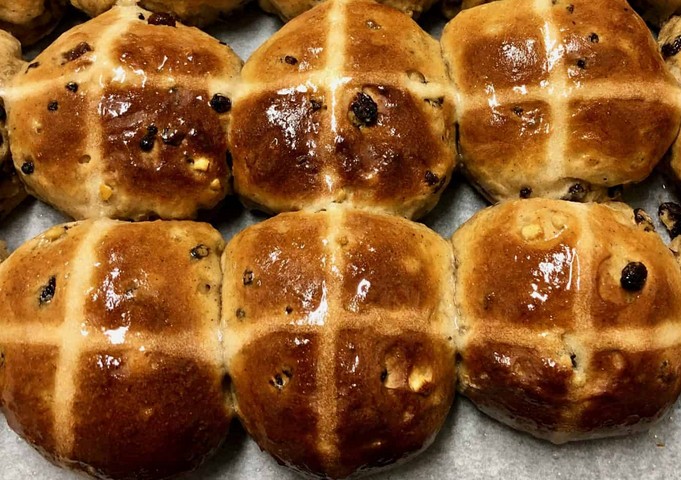
After watching and waiting patiently for the doors of the bakery on the other side of the road to open and the bakers to appear, carrying the trays of goodies over to the shop, everyone in the queue would stand on tiptoes to try to count what was on the trays.
We all knew our place in the queue and also knew that if we were fifteenth and there were only fourteen jam sponges in the delivery, we would only be having buns for tea.
A family sacrifice I only appreciated when, many years later, I was told that my parents always gave me their eggs!!
Everyone was allowed one egg a week plus (after July of 1942) an allocation of powdered eggs.
The adult’s ration of powdered egg was equivalent to three eggs per week, and children were allowed twice as much.
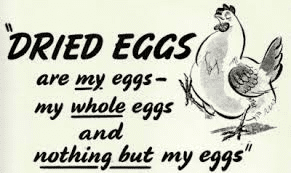
As a five-year-old I was never really aware that there was a shortage of eggs. All I noticed was that my soft-boiled egg was mixed up in a cup along with some bread. My mother’s way of making my meal last longer!
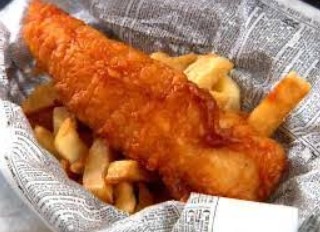
On a lighter vein though, throughout World War II, to keep public morale on a high level, the Government decreed that you did not need a ration book to buy fish and chips. This highly nutritious meal came wrapped up in newspaper and was bought in a local fish and chip shop.
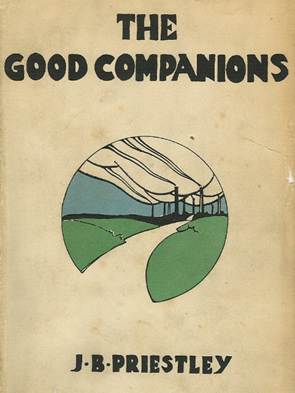
This tasty delicacy was endorsed by Prime Minister Winston Churchill who described fish and chips as “The Good Companions” after JB Priestley’s 1929 popular novel of the time.
The fair distribution of essential supplies – Ration books.
The government, worried that food would become scarce and harder to buy, introduced a system of rationing, aimed at ensuring that everyone got their fair share of whatever essential foods were available. And, with everyone feeling the pinch, slogans like, “Pull in your belt and go without.” were heard regularly on the radio.
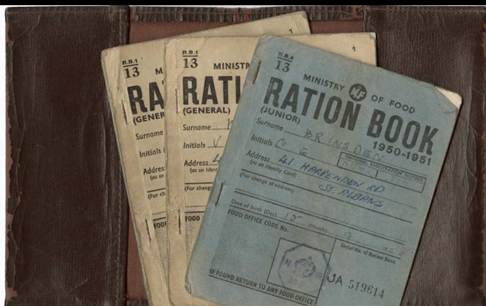
Ration books for a family of three.
At a time of national shortage food rationing was introduced on the 8th of January l940. The scheme was designed to ensure fair shares for all.
The Ministry of Food was in control of rationing. Every man, woman and child was issued with a ration book, and no controlled goods could be bought without one being produced.
Basic foodstuffs such as sugar, meat, fats, bacon and cheese were directly rationed and, to keep a tight rein of the whole situation, families had to sign up to and stay registered with their choice of local retailers; butcher, grocer etc.
A number of other items, such as tinned goods, dried fruit, cereals and biscuits, were also rationed using a points/coupon system According to availability and consumer demand the number of points/coupons allocated, changed frequently.
Priority allowances of milk and eggs were given to those most in need, including children and expectant mothers.
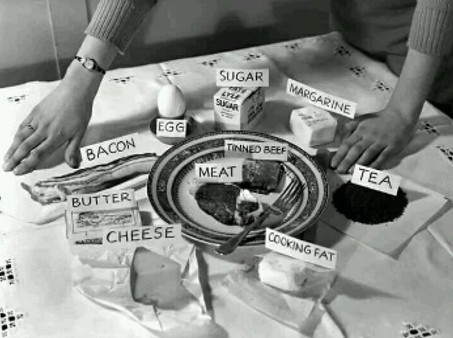
As supplies became scarcer, long queues outside shops became commonplace. Regrettably, there were times when someone got to the front of a long queue, only to discover that the item they had been waiting for had just run out.
Every householder had to fill in a form that provided details of everyone who lived in their house. The government then used this information to issue them with a ration book. Adults had beige coloured ration books, and the children had green ones.
Inside each book 52 coupons allowing a year’s supply for a weekly allocation of each item that was rationed. Everyone had to register with local shops, like a butcher and a grocer, where they would have to go to collect their rations. The government took the responsibility of ensuring that shops were provided with sufficient supplies of essential goods to cater for everyone who had registered with them.
Allotment Gardens
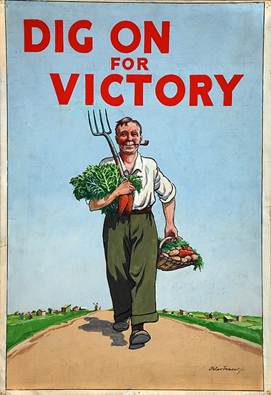
In 1940 the government introduced a scheme – popularly known as the ‘Dig for Victory Campaign’ – that encouraged people to grow vegetables at home. This could be either in their gardens or in an allotment.
Its primary goals were to achieve self-sufficiency, supplement rationed food, and boost morale. The allotment gardens in particular did help to improve nutrition and fostered a sense of local community involvement in the war effort.
Throughout Britain public parks were dug up, sectioned off and made available to individuals to use for this purpose. Everyone was encouraged to turn their flowerbeds into vegetable patches and to grow fruit and veg on any scrap of land that could be cultivated.
The Royal Family were among the first to show the way by replacing shrubs in the Buckingham Palace gardens with onion beds. Even the lawn outside the Tower of London was turned into a vegetable patch.
Dig for Victory helped evoke the Great British spirit and built the sense that all members of the population were involved in the war effort.
By 1940 Germany was responsible for Britain losing 728,000 tonnes of food. However, by 1943 these home ‘gardens’ were producing over one million tonnes of food. Immediately following the introduction of the scheme allotment numbers quickly rose to 815,000 and by the end of the war 1.4 million were in use.
At the height of the war The Ministry of Agriculture and Fishery had more than 70,000 allotments registered in Scotland.
The ‘Dig for Victory’ campaign ensured that Britain did not starve. It also meant that ships, rather than carrying imported foodstuffs, were able to bring significantly more important war supplies like guns and ammunition into the nation.
With the lack of imported foodstuffs, exotic fruit, like bananas, became extremely rare. One alternative to bananas was developed which mixed mashed parsnips with banana essence. The result was used to make banana sandwiches. This was not very enjoyable and in no way replaced the real thing. When bananas re-appeared in the shops younger children who had never seen them, didn’t know what to do with them or even how to eat them.
However not all foods were rationed. Fruit and vegetables were never rationed. Game from the land was never rationed and a limited amount was available in the countryside.
A few alternatives that were sometimes available off the Rations
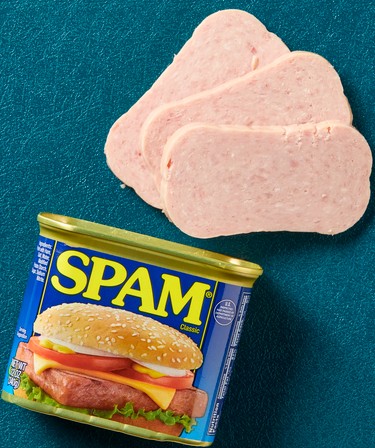
Spam (chopped pork and ham) produced by the American company Hormel and shipped to Allied nations under the Lend-Lease Act. Was generally a welcome and versatile food. Civilians and soldiers ate it fried, in sandwiches, and in various other dishes. It provided reliable source of meat that was not rationed.
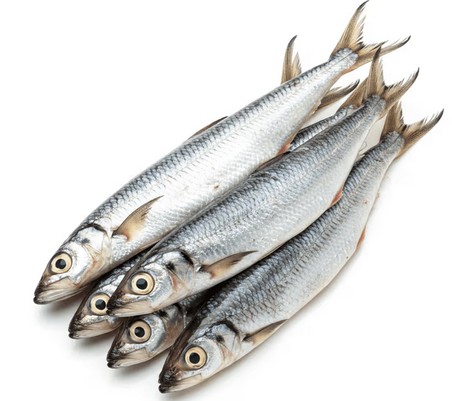
Snoek (a relative of the tuna and mackerel) was an oily fish canned in South Africa and imported in large quantities as a source of protein. However, it was widely disliked due to its strong, unusual taste and smell. Despite government efforts to promote it, most tins remained unsold and after the war, much of the leftover stock was re-labelled and sold as cat food.
Whale meat was another un-rationed alternative to fill in for meat shortages. It was available from butchers or fishmongers and sometimes appeared as whale meat sausages. It was largely unpopular, often described as tough or having a flavour that many found inedible.
The promise
The reality
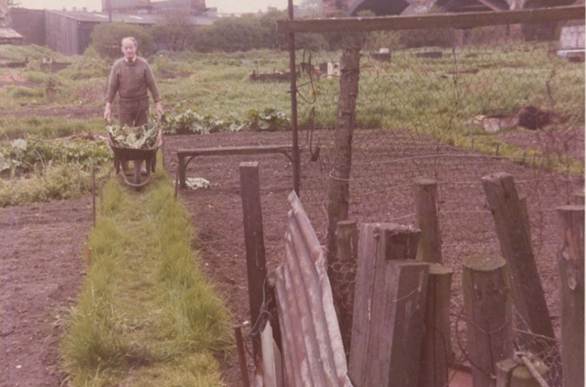
(It was hard work, but we’ll eat well tonight.)
Thanks to everyone’s need to follow a varied diet, the effects of British public’s wartime diet kicked in. And, because they were still getting enough nutritional food, the overall health of the population improved. Almost everyone lost weight, infant mortality declined and life expectancy rose.
Although fish was not rationed, as the war progressed, fish prices increased taking it beyond the pocket of many.
And Finally
One incongruity I do remember though is that one of the local fish and chip shops we used, was owned by 2 German brothers. I never knew their names, but their customers always called them Fritz and Hans.
The typical Germanic-like pair with close cropped white hair and clipped accent, just smiled then with precise efficiency – as you would expect – got on with the order at hand.
Their shop in Trafalgar Street in Leith (Number 12, I think) opened promptly at 5pm and closed at 10:30pm. And, even if they did fry everything in whale oil, outside there was always a queue waiting for the doors to open. Also a regular stream of customers passing through their small, neat and tidy premises until 10:30, i.e. half an hour after ‘Time gentlemen please’ had been called in The Trafalgar Bar just a few doors away. (last orders)
Regrettably, apart from the shop premises still being there, now a café, I could find no record of it having been a fish and chip shop nor could I discover any references to the personalities I knew and remember so vividly. Perhaps they came from some other central European country, and we all know how rumours start!
But it was there and saw it with my own eyes, so I am thoroughly convinced it all happened.
Thanks for sharing my Wartime Memories.
Johnny
I aim to complete a collection of 10 for your enjoyment. The next 2 Wartime Memories are about my cousin who sailed on the battleship The Prince of Wales (sunk in the Pacific Ocean by Japanese aircraft December 1941). It is split into two separate posts, due to the number of photographs.


Born in 1948, I remember little of the rationing, even though it didn’t end until July 1954, and since Dad was a farm labourer and we also had a small holding, keeping hens and pigs, with an occasional cow, I think we had more than enough eggs and bacon!
LikeLiked by 2 people
Thank you for sharing Johnny 🤗
LikeLiked by 1 person