

WARTIME MEMORIES No 4
I remember Rationing, and here is why it happened:
Before the war, Britain imported two thirds of its food from it’s Dominions, principally Canada. This included half of its meat and most of its cheese, sugar, fruit, wheat and some other foodstuff. Its oil came mainly from Trinidad, Mexico & Venezuela.
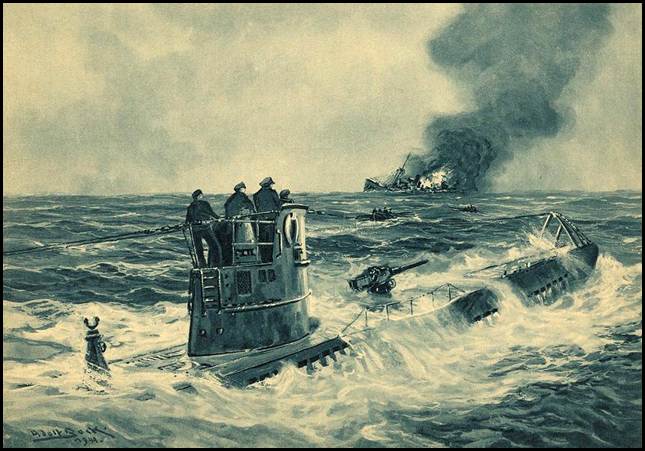
Right from the start of WW2, in order to carry out Hitler’s plan to starve the Britain into surrender, minefields were laid, and packs of German U boats – as well as surface raiders and aircraft – were sent out to hunt down and sink Allied shipping. Their efforts all focussed on Britain’s principal supply lanes across the North Atlantic Sea.
Now that there was a war on, these essential commodities still had to be carried across the North Atlantic by lightly armed, vulnerable ships over what had become, an ocean full of, more often than not, invisible enemy ships.
Our Merchant fleet – formed immediately after the first World War – was now at the mercy of Germany’s U boats and soon began to experience high losses in its supply vessels, particularly those coming from the West and the Atlantic ocean. This resulted in Britain’s stocks of essential supplies reaching critical levels.
In 1939 the British Merchant fleet was the largest in the world, employing some 200,000 men and women, almost one third of the entire world’s merchant fleet at the time. A fair proportion of these intrepid civilian sailors coming from all over the British Empire, including India, Hong Kong and West Africa.
On 26th August 1939, all Merchant shipping was placed under the control of the Ministry of Shipping which was charged with introducing ways of defending these vulnerable ships and their brave crews from German attacks.
Shortly afterwards, following the declaration of war in September 1939, Lieutenant-Colonel Sir John Gilmour – Later Frederick James Marquis, 1st Earl of Woolton – was put in charge of Britain’s merchant fleet.
While the responsibility for crewing and provisioning remained under the jurisdiction of the shipping industry, the Ministry dictated what cargo ships would carry and the functions they would fulfil in order to efficiently support the war effort. With all of the U.K.’s oil arriving by sea, half of her food and most of her raw materials – altogether weighing in at more than a million tonnes per week – this was an enormous undertaking and would be a crucial contribution to ensuring the nation’s survival.
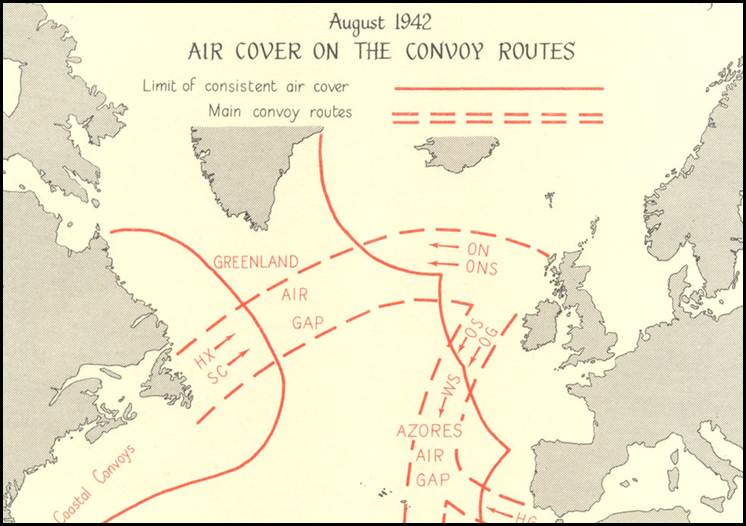
Ships loaded and ready to sail to Britain were gathered together and organised into convoys protected by Royal Navy warships and, in some areas, by land based aeroplanes.
The first of a series of regular organised convoys to the U.K. sailed on 2nd September 1939 and by 1941, convoys were leaving Newfoundland, Canada every six days. The sea crossing to Great Britain took 14 days.
Convoys sailing East to West left from the Thames, London and the Mersey, Liverpool on 7th September.
Later, in an attempt to improve the poor survival rate, the assembly point was moved south to New York.
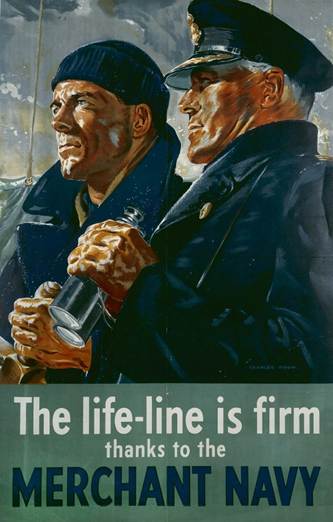
Poster of the time
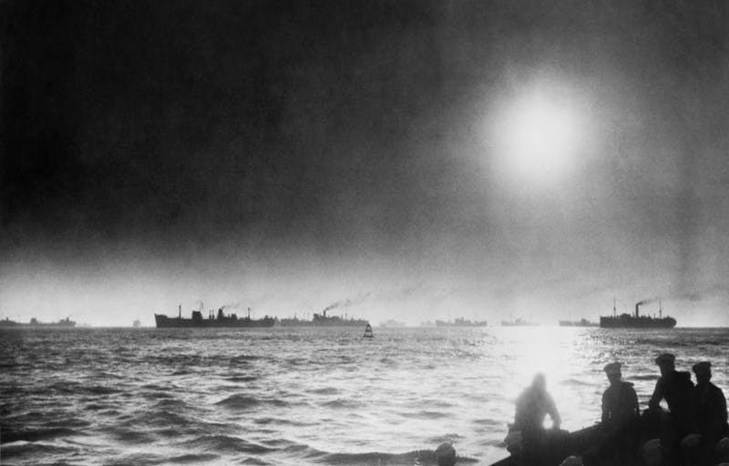
A convoy crossing the North Atlantic in 1942.
The struggle for control of the North Atlantic shipping routes, now referred to as the ‘Battle of the Atlantic’, was one of the longest campaigns of WW2 and for as long as it went on, both British and American shipyards worked 24/7 to replace ships that were being sunk in almost unsustainable numbers.
The turning point of this conflict came in May 1943, by which time Allied defence efforts were sinking enough U-boats to force the Germans to lift the U boat blockade and withdraw their ships from the North Atlantic.
The ultimate cost of this victory, in this vast area of operations, was sobering however, as between 1939 and 1945, 3,500 Allied merchant ships (14.5 million gross tons) and 175 Allied warships were sunk, on top of which 72,200 Allied naval and merchant seamen lost their lives.
CONVOY FACTS
A typical WW2 North Atlantic convoy consisted of 30 to 70 merchant ships carrying vital supplies, protected by a close escort group of 6–8 naval vessels, including destroyers, corvettes and frigates. With air cover provided by escort carriers.
In the first two weeks of the war, 27 merchant ships were sunk in the Atlantic, and between September 3 and the end of the year, 216 merchantmen went down, depriving Britain of 748,000 tons of vital supplies. By the end of the first 12 months the number of merchant ships sunk had risen to 438
Within two weeks of the start of the convoys, Britain’s 22,500 ton aircraft carrier HMS Courageous was sunk by U Boat-29 off south western Ireland on September 17. Three days later the majestic, 22,000-ton aircraft carrier HMS Ark Royal narrowly avoided torpedoes from a U-boat. The navy hastily withdrew its precious carriers from such routine duties.
Weather on North Atlantic convoys during WW2 was brutally harsh, characterized by consistent icy gales, mountainous seas, and snow, often creating more danger than enemy action. Winter brought near-perpetual darkness and arctic temperatures that froze sea spray to decks, while summer meant constant daylight trips, making ships vulnerable to U-boats and enemy aircraft.
Thick fog and snowstorms were common, which, while hindering enemy target spotters, made navigating the tightly packed convoys treacherous and often resulted in collisions.
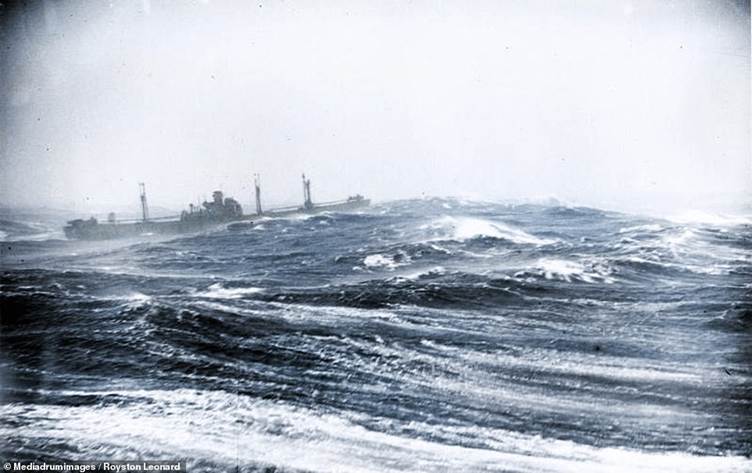
Typical conditions at sea in the North Atlantic
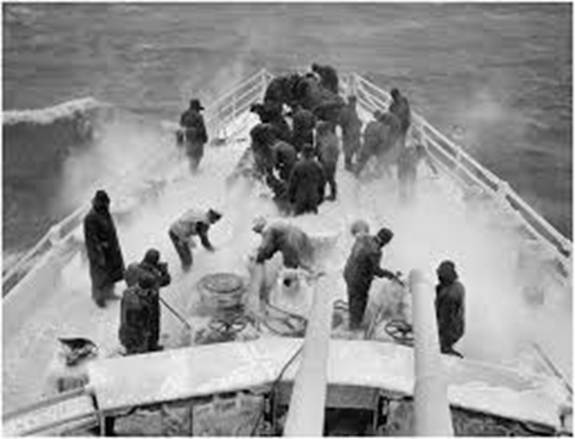
Clearing Ice off the decks
Footnotes
WW2 convoy losses were staggering, especially in the Battle of the Atlantic.
Over 21.5 million Gross Registered Tons (GRT) of merchant shipping was sunk in WW2, with U-Boat submarines causing the majority of this.
In 1942 alone, nearly 7.8 million GRT was lost sunk, mainly by U-boats.
U-boats alone sunk the most ships. losses by nation: Britain (over 1,600), followed by the U.S. (549), Norway (314), Holland (137), and Greece (124)
Despite sharing the word ‘Navy’ in their titles, the difference between the Royal and Merchant Navies was that sailors in the latter were classed as civilians.
After the outbreak of war, Germany declared that every vessel of the British mercantile marine was to be regarded as a warship, meaning that the sailors of the Merchant Navy faced tremendous risks.
Tragically, 30,248 merchant seamen lost their lives during World War Two, a death rate proportionally higher than in any of the armed forces.
*
To be continued, in Wartime Memories No 5 which tells my experience of rationing in Britain.
Thanks
Johnny
 Johnny Jones